
Ski Jackets for men


Select Size


Select Size


Select Size


Select Size


Select Size


Select Size


Select Size


Select Size


Select Size


Select Size


Select Size


Select Size


Select Size


Select Size


Select Size


Select Size


Select Size


Select Size


Select Size


Select Size


Select Size


Select Size


Select Size


Select Size


Select Size


Select Size


Select Size


Select Size


Select Size


Select Size


Select Size


Select Size


Select Size


Select Size


Select Size


Select Size


Select Size


Select Size


Select Size


Select Size


Select Size


Select Size


Select Size


Select Size


Select Size
Colmar men's ski jackets include down jackets, synthetic-padded models, softshells and shells, with different warmth levels and degrees of protection. The category offers water-repellent and waterproof garments, regular or comfort fits and solutions with fixed, detachable or no hood. To choose, looking at the padding is not enough: consider waterproofing, breathability, warmth and the space needed for layering together.
Men's ski jackets, snow jackets and ski down jackets for the slopes
Ski jacket, snow jacket and ski down jacket are often used as synonyms, but they have different features. A ski jacket is a technical garment designed to protect from the elements and follow your movements while skiing.
A ski down jacket adds substantial padding, in down or synthetic fibres, for intense cold. A snow jacket may have a more versatile style, also suitable for walks and life in a mountain resort. Knowing these differences helps you find your way around the collection.
How to choose a men's ski jacket
The right jacket depends on where and how you ski. For cold days and many hours on the slopes, a warm or very warm model can be useful; if you ski more dynamically, you may prefer a less insulated construction that is easier to adjust with layers.
Also consider fit and length: the garment should cover the torso well when you bend, without creating tension across the shoulders and arms.
Waterproofing and hydrostatic head ratings
The hydrostatic head expresses the fabric's resistance to water pressure: higher values indicate a stronger barrier, but the number should be interpreted together with the garment's construction, seams and intended use. A day with dry snow may call for different protection than damp conditions or persistent snowfall. Refer to the data on the product page of the model you are considering.
Breathability and heat management
Breathability is the garment's ability to release the vapour produced by the body during activity. A jacket with poor breathability, even if highly waterproof, can trap moisture inside, leaving you feeling cold when you stop.
Underarm vents, to open on the most intense runs or on mild days, also help manage heat. A good layering system under the jacket completes temperature regulation.
Padded jacket, ski down jacket, insulator or shell
A padded jacket combines insulation and outer protection; a ski down jacket prioritises warmth; an insulator is designed as a lighter thermal layer; a shell protects from the elements and is completed by layering. Colmar also offers shell solutions to pair with mid layers.
The modular choice is useful if you ski at different times of winter and want to adapt the same outer protection to different temperatures. Before choosing, consider whether you prefer a single warm garment or a more flexible system made up of a shell and separate thermal layers.
Softshell jackets and technical models: differences in use
A softshell ski jacket is made from stretch, breathable and wind-resistant fabrics, often with a water-repellent finish. It offers great freedom of movement and is popular on spring days, for ski touring and aerobic activities.
Padded technical models or those with a membrane provide more complete protection against snow, rain and intense cold. In short: softshell for movement and mild conditions, technical jacket for deep winter and changeable weather at altitude.
Functional details of a snow jacket
A snow jacket's details make the difference when you spend many hours on the snow. Waterproof zips, taped seams, inner stretch cuffs and a drawcord hem help retain heat and keep snow out.
A dedicated ski pass pocket on the sleeve lets you pass through the turnstiles quickly. Inner pockets protect smartphones and batteries from the cold, while a goggle pocket keeps your goggles safe from scratches. Check the product page to see which details the model you are interested in has.
Hood, neck warmer, pockets and adjustments
An adjustable hood, neck warmer, pockets, cuffs and hem adjustments help control the entry of snow and wind and heat loss. A well-positioned ski pass pocket saves you opening your jacket at the lifts, while protected inner pockets are useful for smartphones and small items. Check the features of each model: details can vary considerably between down jacket, softshell and shell.
Fit and freedom of movement
A ski jacket should leave shoulders and arms free even with base and mid layers. Pre-shaped sleeves, stretch inserts and ergonomic constructions make it easier to rotate your torso and use your poles; an adequate length protects the lower back when you bend or sit on the chairlift.
To check the size, wear the layers you will actually use and try raising your arms, rotating your torso and adopting a tucked position: the hem should not ride up too much and the shoulders should not pull. A comfort fit leaves more room for layering, while a regular fit keeps volumes more compact. Finally, check cuffs, hem and hood: they should be adjustable without interfering with gloves, helmet and other equipment.
How to pair ski jacket and trousers
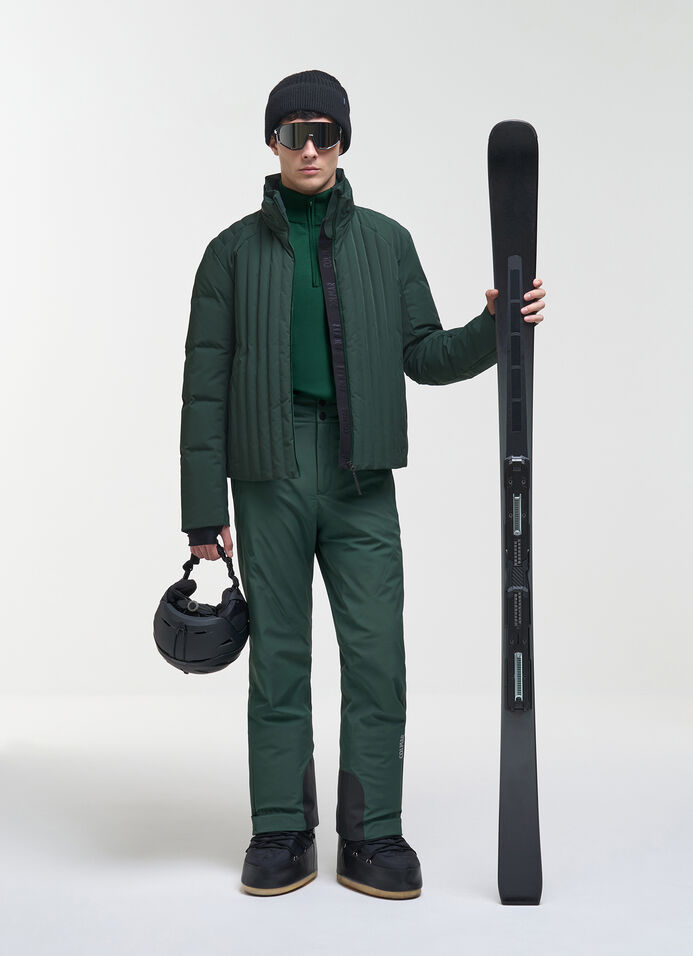
An outfit works best when jacket and trousers offer a consistent level of protection. A padded jacket pairs well with padded men's ski trousers or salopettes, a shell with technical trousers with a membrane.
In terms of style, black or dark trousers make any jacket versatile, while a coordinated set creates a bold, recognisable look. Complete the outfit with men's ski accessories such as a matching hat and neck warmer.
Base layers and fleeces for a layering system
Even the best jacket only performs at its best within a layering system. Men's base layers wick sweat away from the skin and keep the body dry. Men's mid layers, such as fleeces and insulating tops, add adjustable warmth. This way the same jacket adapts to very different days. Don't forget warm, waterproof men's ski gloves, essential for comfort and grip on the poles.
From intense cold to milder days
The warmth level lets you quickly distinguish between medium, warm and very warm models. On harsh days, pair a more insulated jacket with a technical base layer and a suitable mid layer; in mild temperatures, reduce the mid layer or choose a less warm jacket. The goal is to maintain consistent comfort between runs, chairlift and breaks, avoiding both cold and overheating.
Caring for your technical jacket according to its instructions
To preserve membranes, padding and outer treatments, always follow the label. Close zips and Velcro, do not use fabric softeners unless permitted and dry the jacket completely before storing it. A water-repellent treatment should only be restored with compatible products and when indicated in the garment's instructions.